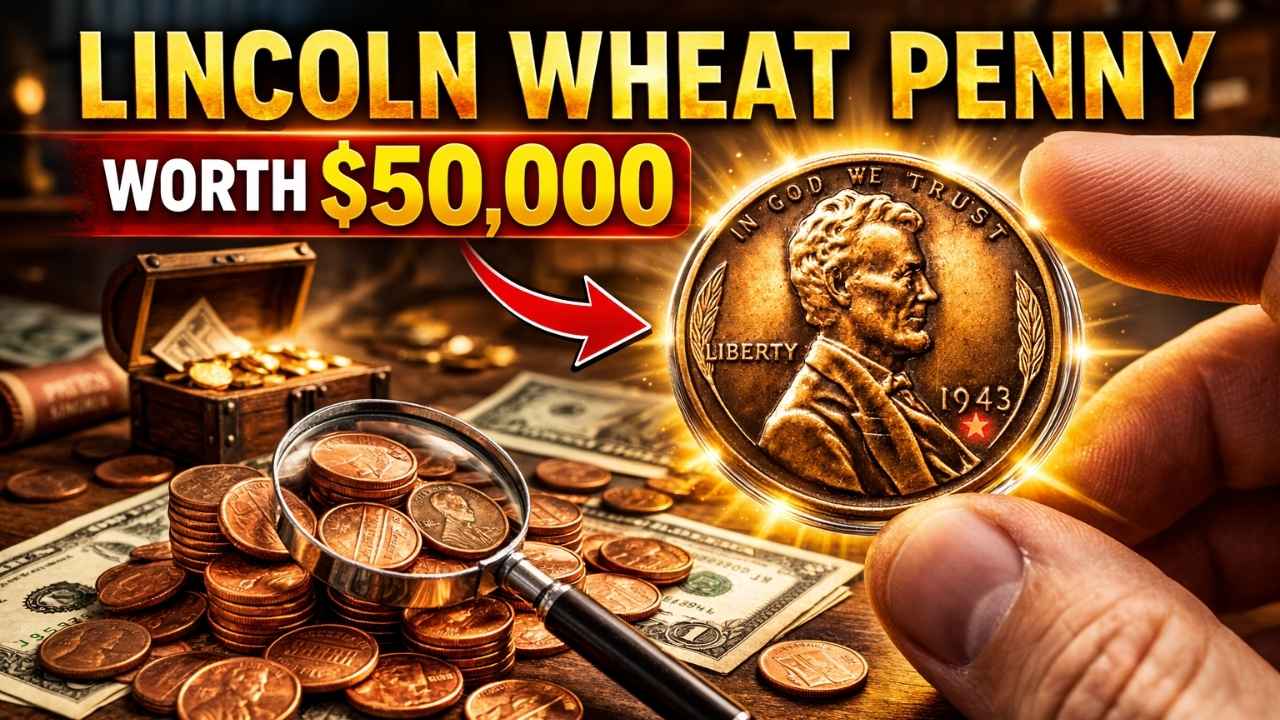
Lincoln Wheat Penny Worth $50,000: Everyday pocket change often goes unnoticed. Most of us drop coins into jars, spend them without thought, or let them pile up in drawers. Yet hidden among those ordinary cents could be a small fortune. The Lincoln Wheat Penny, minted between 1909 and 1958, is one of the most iconic coins in American history. While most examples are worth only a few cents, certain rare varieties can fetch tens of thousands of dollars. Some have even sold for $50,000 or more, turning casual coin collectors into lucky treasure hunters overnight.
This article explores the history of the Lincoln Wheat Penny, why some are so valuable, and how you can identify one in your own change.
The History of the Lincoln Wheat Penny
The Lincoln Wheat Penny was introduced in 1909 to commemorate the centennial of Abraham Lincoln’s birth. Designed by Victor David Brenner, it was the first regular-issue U.S. coin to feature a real person. The obverse shows Lincoln’s portrait, while the reverse displays two wheat stalks framing the words “ONE CENT.”
The coin remained in circulation until 1958, after which the reverse design was replaced with the Lincoln Memorial. Despite its long run, certain years and minting errors make some Wheat Pennies exceptionally rare.
Why Some Wheat Pennies Are Worth Thousands
Not all Wheat Pennies are created equal. Most are worth only face value, but a select few stand out due to rarity, condition, or minting mistakes. Collectors prize these coins because they represent anomalies in U.S. coinage history.
Key reasons for high value include:
- Low mintage numbers: Some years had limited production.
- Minting errors: Double dies, off-center strikes, or wrong-metal coins.
- Special markings: Certain mint marks like “D” for Denver or “S” for San Francisco can increase rarity.
- Condition: Coins in pristine, uncirculated condition are worth far more than worn examples.
Famous Rare Wheat Pennies
Some Wheat Pennies have achieved legendary status among collectors. Here are a few examples:
| Year | Mint Mark | Notable Feature | Approximate Value |
|---|---|---|---|
| 1909-S VDB | S | Designer’s initials VDB on reverse | $1,000–$50,000 |
| 1914-D | D | Low mintage, rare in circulation | $2,000–$40,000 |
| 1922 No D | None | Missing Denver mint mark | $10,000–$50,000 |
| 1943 Copper | None | Wrong metal, struck in copper instead of steel | $100,000+ |
| 1955 Double Die | None | Strong doubling of date and lettering | $10,000–$50,000 |
These coins are the holy grail of Wheat Penny collecting. While finding one in circulation today is rare, it is not impossible.
How to Spot a Valuable Wheat Penny
Spotting a valuable Wheat Penny requires patience and a keen eye. Here are steps to follow:
- Check the date and mint mark: Look closely at the year and the small letter under the date. Rare years and mint marks are the first clue.
- Inspect for errors: Doubling of letters, missing mint marks, or unusual coloration can indicate a valuable error coin.
- Examine the condition: Coins with sharp details and minimal wear are worth more.
- Use a magnifying glass: Many errors are subtle and require close inspection.
- Compare with value guides: Numismatic references and auction records help confirm rarity.
The Role of Coin Grading
Professional grading services like PCGS and NGC evaluate coins based on condition. A Wheat Penny graded “Mint State” can be worth exponentially more than the same coin in circulated condition. For example, a 1914-D penny in worn condition might sell for $2,000, while a mint-state example could reach $40,000.
Stories of Lucky Finds
Collectors often share stories of discovering rare Wheat Pennies in everyday change. One famous case involved a man who found a 1955 Double Die penny in a roll of coins from the bank. Another tale tells of a child who spotted a 1943 copper penny in their grandfather’s coin jar, later selling it for six figures. These stories fuel the excitement of searching through pocket change.
Tips for Searching Your Change
If you want to try your luck, here are practical tips:

- Save all Wheat Pennies: Even common ones are collectible.
- Search coin rolls from banks: Many collectors find rare coins this way.
- Check inherited collections: Old jars and albums often hide treasures.
- Learn the key dates: Memorize the most valuable years and mint marks.
- Handle coins carefully: Avoid cleaning, which can reduce value.
The Market for Wheat Pennies
The coin market is dynamic. Prices fluctuate based on demand, rarity, and condition. Auction houses regularly feature Wheat Pennies, and online marketplaces allow collectors to buy and sell. While most Wheat Pennies are worth only a few cents, the rare varieties continue to command impressive prices.
Conclusion
The Lincoln Wheat Penny is more than just a coin. It is a piece of history, a collector’s dream, and sometimes a hidden fortune. While most examples are common, rare varieties like the 1909-S VDB, 1914-D, 1922 No D, 1943 Copper, and 1955 Double Die can be worth tens of thousands of dollars.
By learning how to spot these treasures, you might just find a $50,000 penny in your own change. The thrill of discovery keeps collectors searching, proving that even the smallest coin can hold extraordinary value.