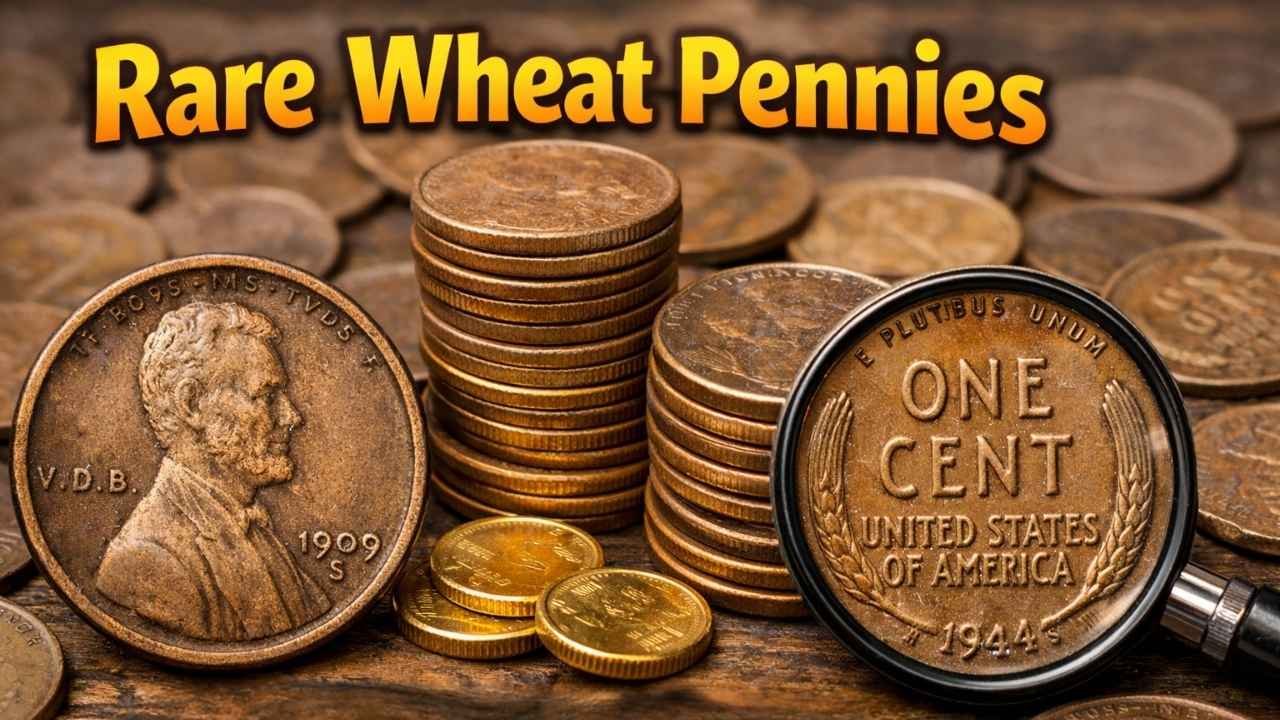
Rare Wheat Pennies Worth Big Money: The Lincoln Wheat penny, minted from 1909 to 1958, is one of the most iconic coins in American history. For collectors, these pennies are more than just currency; they are treasured artifacts that tell stories of the nation’s past. While most Wheat pennies are common and worth only a few cents, certain rare dates and varieties can command staggering prices. This guide explores the history, rarity, and value of Wheat pennies, offering a full chart and practical advice for collectors.
Origins of the Wheat Penny
The Wheat penny was introduced in 1909 to honor the centennial of Abraham Lincoln’s birth. Victor David Brenner designed the coin, placing Lincoln’s portrait on the obverse and two wheat stalks on the reverse. This design symbolized prosperity and marked the first time a real person appeared on U.S. coinage. The coin quickly became popular, and millions were minted over the next five decades.
Why Collectors Value Wheat Pennies
Several factors determine the value of Wheat pennies:
- Scarcity: Some years had low mintages, making them rare.
- Mint Marks: Coins struck at Denver (D) or San Francisco (S) can be harder to find.
- Errors and Varieties: Mistakes during production, such as doubled dies or wrong planchets, create highly prized coins.
- Condition: Coins in pristine, uncirculated condition are far more valuable than worn examples.
Key Dates and Rarities
Collectors often seek “key dates,” which are the rarest and most valuable Wheat pennies. Some of the most famous include:
- 1909-S VDB
- 1914-D
- 1922 No D
- 1931-S
- 1943 Bronze
- 1944 Steel
- 1955 Doubled Die
Each of these coins has a unique story, often tied to minting errors or limited production runs.
Full Value Chart of Rare Wheat Pennies
Here is a chart summarizing some of the most valuable Wheat pennies and their approximate values in high-grade condition.
| Year | Mint Mark | Variety | Approximate Value (High Grade) |
|---|---|---|---|
| 1909 | S VDB | Key Date | $700 – $2,000 |
| 1914 | D | Key Date | $1,500 – $15,000 |
| 1922 | No D | Error Variety | $12,000 – $30,000 |
| 1931 | S | Low Mintage | $100 – $1,000 |
| 1943 | D Bronze | Wrong Planchet | $250,000 – $840,000 |
| 1943 | S Bronze | Wrong Planchet | $300,000 – $500,000 |
| 1944 | Steel | Wrong Planchet | $100,000 – $408,000 |
| 1955 | Doubled Die | Error Variety | $5,000 – $50,000 |
Famous Error Coins
Error coins are among the most exciting finds for collectors. The 1955 doubled die penny is legendary, with its dramatic doubling visible to the naked eye. The 1943 bronze pennies, struck on leftover copper planchets during World War II, are among the rarest coins in existence. Similarly, the 1944 steel cents were accidental strikes when leftover steel blanks were used.
How to Identify Valuable Wheat Pennies
Collectors should pay attention to:
- Mint Marks: Found below the date on the obverse.
- Die Errors: Doubling, off-center strikes, or missing details.
- Metal Composition: Most Wheat pennies are copper, but rare steel or bronze errors exist.
- Condition: Coins graded MS65 or higher are exponentially more valuable.
Grading Wheat Pennies
Professional grading services like PCGS and NGC evaluate coins based on strike quality, luster, and wear. Grades range from Poor (P-1) to Mint State (MS-70). Even small differences in grade can mean thousands of dollars in value.
Collecting Strategies
For beginners:
- Start with common Wheat pennies to learn grading basics.
- Build a complete set from 1909 to 1958.
- Focus on affordable semi-key dates before pursuing rarities.
- Consider certified coins to avoid counterfeits.
Investment Potential
Rare Wheat pennies have consistently appreciated in value. High-grade examples of key dates are considered strong investments in numismatics. However, like any collectible, values can fluctuate based on demand and economic conditions.
Stories Behind the Coins
Each rare Wheat penny tells a story. The 1909-S VDB reflects the controversy over Brenner’s initials, which were removed after complaints. The 1922 No D penny resulted from worn dies at the Denver Mint. The 1943 bronze pennies highlight wartime shortages. These stories add depth and intrigue to collecting.
Tips for Spotting Counterfeits
Because of their high value, rare Wheat pennies are often counterfeited. Collectors should:
- Learn diagnostic features of genuine coins.
- Buy from reputable dealers.
- Use magnification to check details.
- Consider third-party grading for authentication.
Preserving Your Collection
Proper storage is essential:
- Use coin holders or albums.
- Avoid cleaning coins, which reduces value.
- Store in a cool, dry environment to prevent corrosion.
Conclusion
Wheat pennies are more than small copper coins; they are pieces of American history that can be worth a fortune. From the humble 1909-S VDB to the legendary 1943 bronze penny, these coins continue to captivate collectors and investors alike. Whether you are just starting or already have a collection, understanding the rarity, value, and stories behind Wheat pennies will enrich your numismatic journey.