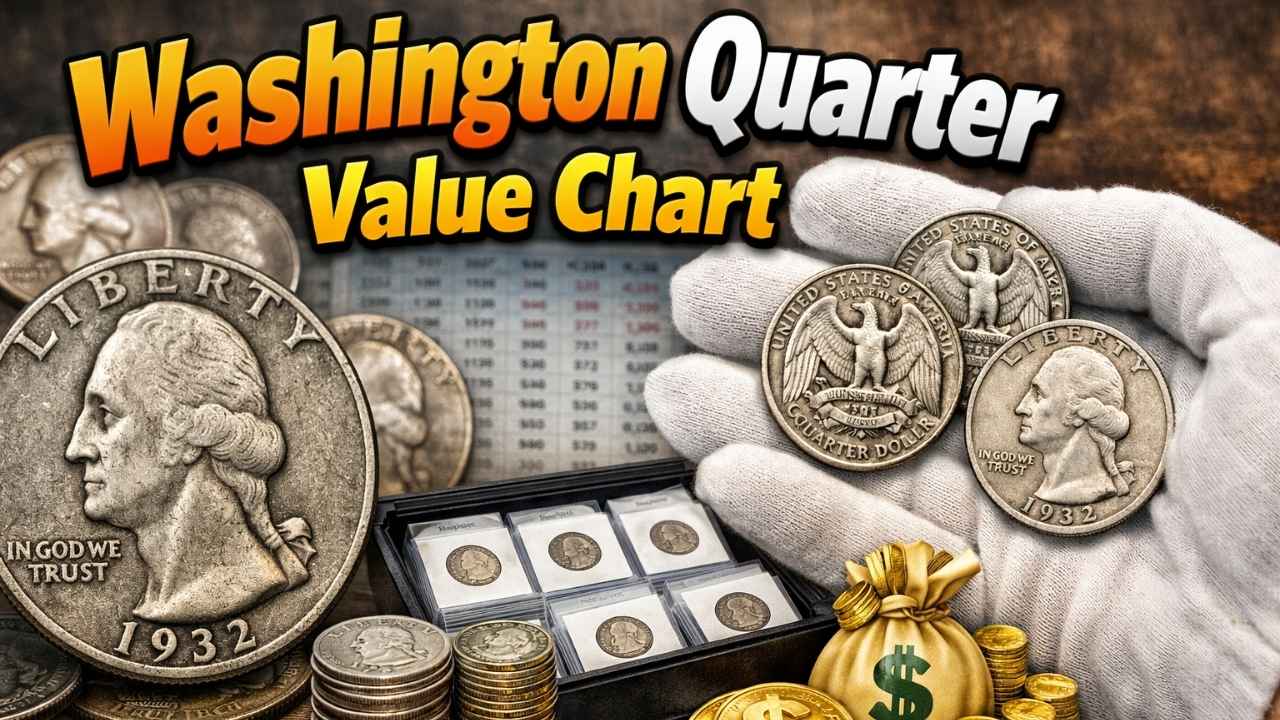
Washington Quarter Value Chart 2026: The Washington Quarter, first minted in 1932, is one of the most iconic and widely circulated coins in the United States. Its design, featuring the image of George Washington on the obverse and an eagle on the reverse, has undergone several changes over the years, but it remains a symbol of American numismatics.
The value of a Washington Quarter can vary greatly depending on several factors, such as its year, mint mark, condition, and any unique characteristics like mint errors. In this article, we will explore the Washington Quarter’s history, the key rare coins that collectors should watch out for in 2026, and the mint errors that can make these quarters worth more than face value. We will also provide a Washington Quarter value chart for 2026 to help guide collectors and investors.
The History of the Washington Quarter
The Washington Quarter was introduced in 1932 to commemorate the 200th anniversary of George Washington’s birth. It replaced the Standing Liberty Quarter, which had been in circulation since 1916. Designed by John Flanagan, the coin features a portrait of Washington on the obverse and an eagle on the reverse. The design was based on a statue of Washington by Jean-Antoine Houdon.
Over the decades, the Washington Quarter design has undergone several changes. In 1999, the U.S. Mint began the 50 State Quarters Program, which featured different designs for each state. This series ran until 2008 and contributed significantly to the popularity of Washington Quarters. More recently, the America the Beautiful Quarters Program, which began in 2010, has continued to feature new designs honoring national parks and sites across the country.
While many Washington Quarters are still in circulation, certain key dates and varieties are highly sought after by collectors and can command high prices at auction. These include coins from certain years, mint marks, and those with minting errors that make them rarities.
What Determines the Value of a Washington Quarter?
The value of a Washington Quarter depends on several factors. Understanding these can help collectors assess the worth of their coins. The main factors that affect the value of a Washington Quarter include:
1. Year and Mint Mark
Certain years and mint marks are rarer than others, making them more valuable. For example, quarters minted in years with low production numbers or those from specific mints like the San Francisco Mint tend to be more valuable.
2. Condition (Grade)
The condition of the coin is another major determinant of value. Coins that are well-preserved and exhibit little to no wear or damage are worth more. Coins are typically graded on a scale from 1 to 70, with 70 being a perfect coin. Higher-grade coins typically fetch higher prices.
3. Rarity and Demand
A coin’s rarity and demand among collectors also affect its value. Quarters from certain years, or those with particular mint marks or errors, are rarer and more highly sought after, driving up their market value.
4. Mint Errors
Mint errors, such as double strikes, off-center strikes, and die cracks, can make a quarter much more valuable. These errors are often accidental, and their rarity can lead to a significant price increase.

Key Rare Washington Quarters Worth Watching in 2026
Several Washington Quarters from various years are particularly valuable due to their rarity or historical significance. In 2026, collectors will continue to seek out these key coins, and they are expected to maintain or even increase in value.
1. 1932-D Washington Quarter
The 1932-D Washington Quarter is one of the most valuable quarters in the series due to its low mintage of only 436,800 coins. It was the first year of issue for the Washington Quarter and is highly sought after by collectors. Because of its low mintage and historical significance, the 1932-D is often considered a “key date” in the Washington Quarter series.
- Estimated Value in 2026:
- In average circulated condition: $400 – $700
- In high-grade condition (MS-65 or higher): $10,000+
2. 1932-S Washington Quarter
The 1932-S is another key coin in the Washington Quarter series. With a mintage of just 408,000, it is one of the lowest mintage quarters in U.S. history. Like the 1932-D, the 1932-S is highly sought after, and its rarity makes it a top pick for collectors.
- Estimated Value in 2026:
- In average circulated condition: $350 – $600
- In high-grade condition (MS-65 or higher): $8,000+
3. 1936 Double Die Obverse Washington Quarter
The 1936 Double Die Obverse is a rare mint error where the date and inscriptions on the obverse of the coin are doubled. This error makes the 1936 Double Die Obverse one of the most valuable Washington Quarters. The doubled design is noticeable to the naked eye and is a coveted error among collectors.
- Estimated Value in 2026:
- In average circulated condition: $1,500 – $3,000
- In high-grade condition (MS-65 or higher): $15,000+
4. 1950-D Washington Quarter (High Grade)
The 1950-D Washington Quarter is often overlooked, but it can be worth quite a bit in high-grade condition. Coins minted in 1950, especially those from the Denver Mint, are known for their high-quality strikes. In higher grades, these quarters can command a significant premium.
- Estimated Value in 2026:
- In average circulated condition: $10 – $20
- In high-grade condition (MS-65 or higher): $1,000+
5. 1976 Bicentennial Quarter (Proof Coins)
The 1976 Bicentennial Quarter, minted to celebrate the 200th anniversary of the United States, was produced in large quantities. However, the proof versions of this coin, especially those with high-quality strikes, are sought after by collectors. While not as rare as earlier Washington Quarters, the 1976 Bicentennial Proof Quarters can still fetch a decent price in excellent condition.
- Estimated Value in 2026:
- In average circulated condition: $3 – $5
- In high-grade proof condition: $50 – $100
6. 1982 Washington Quarter (No Mint Mark)
The 1982 Washington Quarter without a mint mark is a rare error coin, as it was struck without the expected mint mark, which typically denotes the mint of origin (Philadelphia, Denver, or San Francisco). These coins are highly collectible and can be worth more than standard 1982 quarters.
- Estimated Value in 2026:
- In average circulated condition: $100 – $300
- In high-grade condition: $1,000+
Mint Errors That Can Increase the Value of Washington Quarters
Mint errors are one of the most exciting and rewarding aspects of coin collecting. Many Washington Quarters have been produced with minting errors, which can dramatically increase their value. Some common mint errors in the Washington Quarter series include:
1. Off-Center Strikes
An off-center strike occurs when the planchet (coin blank) is not properly aligned with the dies during the minting process. This can result in a coin with part of its design missing or misaligned. Off-center Washington Quarters are valuable because of their rarity and striking appearance.
- Estimated Value: Off-center Washington Quarters can be worth anywhere from $100 to $3,000 or more, depending on the severity of the off-center strike and the coin’s condition.
2. Double Strikes
A double strike happens when a coin is struck twice by the same die, resulting in a design that appears doubled. This error can make the quarter more valuable, especially if the doubling is clearly visible and pronounced.
- Estimated Value: Double-strike Washington Quarters can fetch anywhere from $200 to $5,000 or more, depending on the visibility of the doubling and the coin’s condition.
3. Die Cracks and Die Chips
Die cracks and die chips occur when there are imperfections in the minting die. These errors can create unique visual patterns on the coin’s design, such as cracks in the lettering or chips in the imagery. While not as dramatic as other errors, die cracks and chips can still make a coin more valuable to collectors.
- Estimated Value: Die cracks and die chips typically increase the value of a Washington Quarter by 10% to 50%, depending on the size and prominence of the error.
Washington Quarter Value Summary Table (2026)
Below is a table summarizing the estimated values of some key Washington Quarters and mint errors for 2026:
| Coin Description | Estimated Value (Average Condition) | Estimated Value (High Grade) |
|---|---|---|
| 1932-D Washington Quarter | $400 – $700 | $10,000+ |
| 1932-S Washington Quarter | $350 – $600 | $8,000+ |
| 1936 Double Die Obverse Washington Quarter | $1,500 – $3,000 | $15,000+ |
| 1950-D Washington Quarter (High Grade) | $10 – $20 | $1,000+ |
| 1976 Bicentennial Washington Quarter | $3 – $5 | $50 – $100 |
| 1982 Washington Quarter (No Mint Mark) | $100 – $300 | $1,000+ |
Conclusion: The Washington Quarter as an Investment
Washington Quarters, especially those from rare years or with minting errors, continue to be highly sought after by collectors and investors alike. Whether you’re holding a 1932-D Washington Quarter, a 1936 Double Die Obverse, or a rare 1982 No Mint Mark error coin, these quarters have significant potential to increase in value over time. By understanding the factors that contribute to their worth, including year, mint mark, condition, and errors, collectors can build a collection that not only holds historical significance but also financial value.
As we approach 2026, these rare and unique Washington Quarters will likely continue to be valuable assets for numismatists, offering both excitement and potential returns for those who know what to look for. Whether you’re a seasoned collector or just starting out, the Washington Quarter series is full of hidden treasures worth exploring.