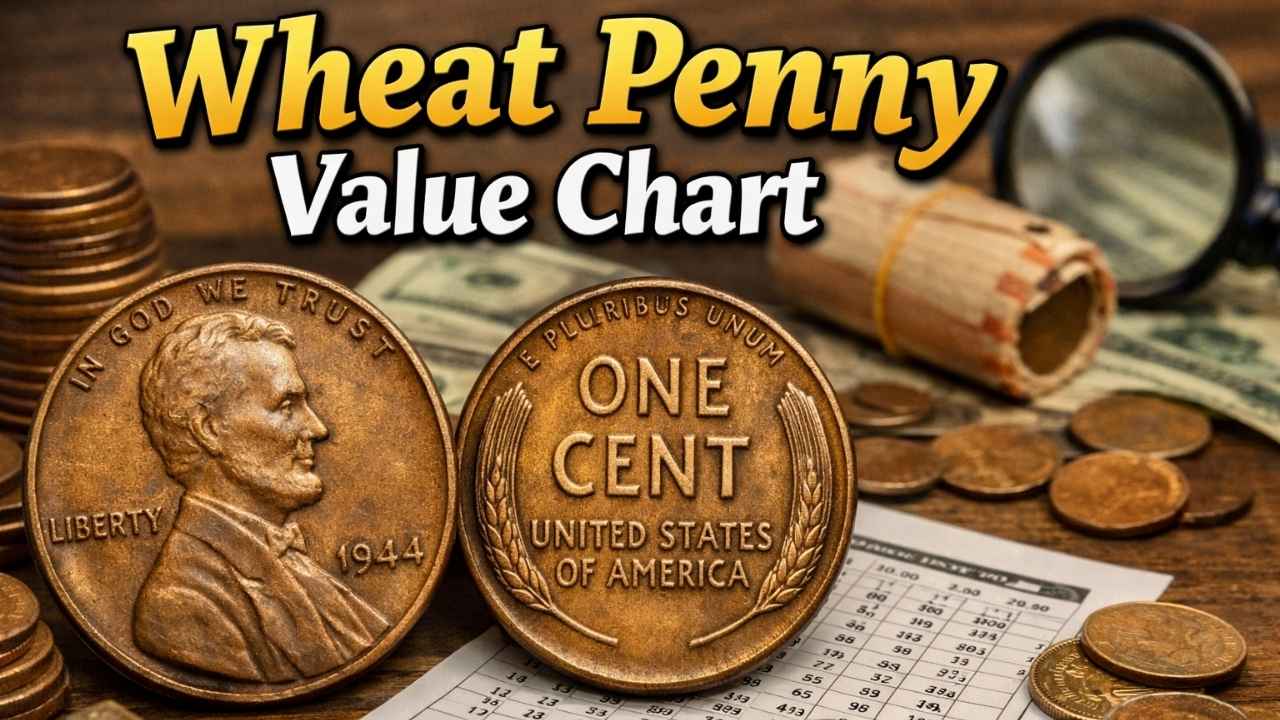
Wheat Penny Value Chart 2026: The Lincoln Wheat Penny remains one of the most iconic coins in American numismatics. Minted from 1909 until 1958, it carried Abraham Lincoln’s portrait on the obverse and two wheat stalks on the reverse. For nearly half a century, this coin circulated through the hands of millions of Americans, becoming a symbol of everyday commerce and national pride. Today, collectors continue to chase rare dates, mint errors, and high-grade examples. In 2026, the Wheat Penny market reflects both historical price trends and modern demand, with certain coins valued at over $100,000.
Origins of the Wheat Penny
The coin was introduced in 1909 to commemorate the centennial of Abraham Lincoln’s birth. Designed by Victor David Brenner, it was the first U.S. coin to feature a real person rather than an allegorical figure. The initials “VDB” appeared prominently on the reverse of the earliest coins, sparking controversy and leading to their removal. This small design change created one of the most famous rarities in American coinage.
Historical Significance
The Wheat Penny was minted during a transformative period in U.S. history. It circulated during World War I, the Great Depression, World War II, and the postwar boom. Its design remained largely unchanged until 1959, when the reverse was replaced with the Lincoln Memorial. Collectors today view the Wheat Penny not only as a collectible but also as a tangible piece of American heritage.
Common Wheat Pennies
Most Wheat Pennies are abundant. Coins from the 1940s and 1950s were produced in huge numbers, often exceeding hundreds of millions per year. Circulated examples from these decades typically sell for 3¢ to 50¢. Even uncirculated coins from common years may only fetch a few dollars. The true excitement lies in the rarities.
Rare Dates and Mint Errors
Some Wheat Pennies are exceptionally rare and valuable. Below is a table highlighting the most famous examples.
| Year and Mint | Notable Feature | Estimated Value Range in 2026 |
|---|---|---|
| 1909-S VDB | Designer initials, low mintage | $700 – $100,000+ |
| 1914-D | Scarce Denver issue | $300 – $150,000+ |
| 1922 No D | Missing mint mark error | $500 – $100,000+ |
| 1931-S | Low mintage San Francisco issue | $100 – $75,000+ |
| 1943 Copper | Struck on bronze planchet | $100,000 – $1,000,000+ |
| 1955 Doubled Die | Dramatic doubling error | $1,000 – $125,000+ |
The 1909-S VDB Penny
The 1909-S VDB is one of the most famous coins in U.S. history. Only 484,000 were minted before the initials were removed. Collectors prize this coin for its rarity and historical significance. High-grade examples can exceed $100,000.
The 1914-D Penny
The 1914-D is another key rarity. With a mintage of just over one million, most were heavily circulated. Finding one in pristine condition is extremely difficult, which drives values into six figures.
The 1922 No D Error
In 1922, all cents were struck at the Denver Mint. A die pair produced coins without the “D” mint mark, creating the famous “No D” variety. This error penny is highly sought after, with top specimens selling for over $100,000.
The 1931-S Penny
The 1931-S had a low mintage of 866,000, making it scarce compared to other years. While not as rare as the 1909-S VDB, it remains a valuable coin, especially in uncirculated grades.
The 1943 Copper Penny
During World War II, pennies were struck in steel to conserve copper for the war effort. A few bronze planchets were mistakenly used, creating the legendary 1943 Copper Penny. These coins are among the most valuable in U.S. numismatics, with auction prices reaching into the millions.
The 1955 Doubled Die Penny
The 1955 Doubled Die is famous for its dramatic doubling of the date and lettering. It is one of the most popular error coins, with values ranging from $1,000 for circulated examples to over $100,000 for pristine specimens.
Auction Records
Auction houses have seen remarkable sales of Wheat Pennies. The 1943 Copper Penny has sold for over $1 million. The 1909-S VDB and 1914-D regularly achieve six-figure prices in top condition. These records highlight the enduring demand for rare Wheat Pennies.
Value Trends Over Time
The value of Wheat Pennies has steadily risen over the decades. Coins once worth a few dollars now command thousands. The table below illustrates how values have changed.
| Coin | Value in 1960 | Value in 2000 | Value in 2026 |
|---|---|---|---|
| 1909-S VDB | $50 | $1,500 | $100,000+ |
| 1914-D | $20 | $2,000 | $150,000+ |
| 1943 Copper | $5,000 | $60,000 | $1,000,000+ |
Collecting Strategies
Collectors often begin with common dates, building sets by year and mint mark. Advanced collectors pursue rarities through auctions or specialized dealers. Preservation is critical, as condition dramatically affects value. Coins should be stored in protective holders to prevent damage.
The Role of Condition
Grading plays a crucial role in determining value. A coin graded “Good” may be worth only a fraction of the same coin graded “Mint State.” Professional grading services provide authentication and condition assessment, which can significantly increase a coin’s market value.
Historical Price Trends
The Wheat Penny market has shown resilience over decades. Prices have risen steadily, reflecting both rarity and collector demand. Economic downturns have had little long-term impact, as coins are viewed as tangible assets. In 2026, the market remains strong, with rare dates achieving record prices.
The Thrill of Discovery
One of the joys of collecting Wheat Pennies is the possibility of finding a rare coin in circulation or an old collection. Stories abound of people discovering valuable pennies in jars, drawers, or inherited collections. The chance that a humble cent might be a hidden fortune keeps collectors engaged.
Conclusion
The Lincoln Wheat Penny is more than just a coin. It is a piece of American history, a symbol of resilience, and a treasure for collectors. While most examples remain common pocket change, a select few have achieved legendary status, worth $100,000 or more. For those who collect, study, or simply admire these coins, the Wheat Penny represents the thrill of discovery and the enduring fascination with numismatics.